The hospital, located in Parel area, on Tuesday got the approval of the Maharashtra ethics committee for conducting the vaccine trials.
A team at Bristol University used recently developed techniques to validate that the vaccine accurately follows the genetic instructions programmed into it by the Oxford University team.
The researchers, working in an 'unprecedented' vaccine development effort to prevent COVID-19, said they have started screening healthy volunteers (aged 18-55) from Friday for their upcoming trial in the Thames Valley Region of England.
The comments came after AstraZeneca and Oxford University acknowledged a manufacturing error that is raising questions about preliminary results of their experimental COVID-19 vaccine.
The global trials were halted after a study participant suffered a 'potentially unexplained illness, reports Sohini Das.
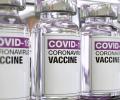
The Oxford vaccine, which also has a tie-up with the Serum Institute of India, is expected to win approval in the UK before Thursday, speeding up the provision of the jab to the most vulnerable groups.
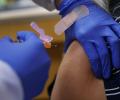
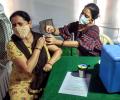
Two male volunteers were administered the vaccine at Bharti Vidyapeeth's Medical College and Hospital, a senior office-bearer of the hospital said.
"We have started the phase-III trials of the vaccine (candidate Covishield). We will administer dose to 150 to 200 volunteers," said Dr Muralidhar Tambe, Dean, Sassoon General Hospital.
This new trial, a single-blind, randomised Phase II trial, will enrol 300 volunteers, with up to 240 of these volunteers receiving the ChAdOx1 nCoV-19 vaccine and the remainder a control meningitis vaccine, which has been shown to be safe in children but is expected to produce similar reactions, such as a sore arm.
AstraZeneca and the University of Oxford, as the trial sponsor, said that they cannot disclose further medical information but confirmed that independent investigations concluded that the trials were safe to restart.
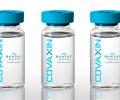
Bharat Biotech recruited 13,000 participants for the Phase-3 clinical trial of Covaxin. This is one of the largest efficacy trials held in the country.
Once the UK drug regulator gives its approval to the Oxford vaccine, the expert committee on COVID-19 at the Central Drugs Standard Control Organisation (CDSCO) will hold its meeting and thoroughly review the safety and immunogenicity data from the clinical evaluations conducted abroad and in India before granting any emergency authorisation for the vaccine here, official sources said.
Blood samples taken from a group of UK volunteers given a dose of the vaccine showed that it stimulated the body to produce both antibodies and 'killer T-cells', a senior source from the trial was quoted by The Daily Telegraph as saying.
The Pune-based company's chief executive Adar Poonawalla said the company, which is the largest vaccine maker in the world, is putting $200 million at risk by manufacturing nearly 300 million doses before the final nod to launch the vaccine in market, which is expected at best by the end of the year.
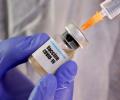
The United Kingdom government has pledged 20 million to support the "ChAdOx1 nCoV-19" coronavirus vaccine trial programme, with UK Health Secretary Matt Hancock saying the government would "throw everything at" finding a vaccine against the deadly virus.
The show-cause notice was issued following reports that human trials of the most promising COVID-19 vaccine candidate, being developed by the University of Oxford, have been put on hold after a United Kingdom participant had an adverse reaction to it.
"The phase-III trial of 'Covishield' vaccine will begin at Sassoon hospital from next week. It is likely to start on Monday. Some volunteers have already come forward for the trial. "Around 150 to 200 volunteers will be administered the vaccine candidate dose," Dean of the state-run Sassoon General Hospital Dr Muralidhar Tambe said.

The Medicines and Healthcare Regulatory Agency, which had been formally tasked by the UK government last month with the process of clearance after the jab emerged "safe and effective" against the novel coronavirus in human trials, is expected to authorise the vaccine by December 28 or 29 after the final data is provided on Monday, 'The Daily Telegraph' quoted senior government sources as indicating.
As for Bharat Biotech, the Subject Expert Committee (SEC) on COVID-19 of the CDSCO asked the firm to expedite volunteer recruitment for the ongoing clinical trial and said it may conduct interim efficacy analysis for further consideration of restricted emergency use approval for its vaccine Covaxin, they stated.
The nature of the adverse reaction and when the development took place were not initially clear, although the participant is expected to recover, said an individual familiar with the matter.
Two men, aged 32 and 48, were given the first shot of the 'Covishield' vaccine, being manufactured by Pune-based Serum Institute of India, at Bharti Vidyapeeth's Medical College and Hospital on Wednesday. The dose will be repeated after one month, an official said.
The DCGI also directed Serum Institute of India to increase the safety monitoring of the subjects already vaccinated as part of the trial, and submit the plan and report.
However, in two different dose regimens, the vaccine's efficacy was 90 per cent in one and 62 per cent in the other.

The Oxford vaccine, which also has a tie-up with the Serum Institute of India, was first administered to Brian Pinker, an 82-year-old Oxford-born dialysis patient. Pinker is among the first to be vaccinated by the Oxford University Hospital's (OUH) chief nurse, hailed as a major milestone in the phased vaccination programme being undertaken by the National Health Service (NHS).
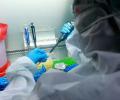
The results show they induced strong antibody and T-cell immune responses for up to 56 days after they were given. T-cells are crucial for maintaining protection against the virus for years.
This means there are now four promising vaccines on the horizon after Pfizer-BioNTech, Sputnik and Moderna already reporting good preliminary data from Phase 3 trials.
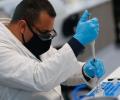
'Once DCGI will give us the permission to restart the trials in India, we will resume the trials,' Serum Institute of India (SII) said in a statement.

SII has been asked to submit to the DCGI's office details of medication used in accordance with the protocol for management of adverse events.
Earlier this week, AstraZeneca said it had paused the trials because of 'an unexplained illness' in a participant in the study.
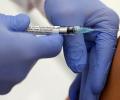
The DCGI arrived at the conclusion on Wednesday based on the recommendations of an independent expert committee which has also opined that compensation should not be paid to the volunteer, they said.
AstraZeneca Plc and the University of Oxford are facing questions about their Covid-19 vaccine and whether regulators would quickly authorise its emergency use after the pharma company acknowledged an error in the vaccine dosage received by some participants and other irregularities and omissions, according to the New York Times.
'No matter how much the political pressure is, I cannot say I will bring the Moon for you tomorrow!'
So far, no other vaccine has been approved globally for children below 12 years. Sohini Das reports.

Currently, phase 2 and 3 clinical trials of the Oxford vaccine candidate is going on in the United Kingdom, phase 3 clinical trial in Brazil and phase 1 and 2 clinical trials in South Africa.
The institute expects to complete both, phase-2 and 3 trials in India by the end of this year.

There is a decisive shift in how cancer may soon be confronted and, hopefully, defeated.
The vaccine, ChAdOx1 nCoV-19 and also known as AZD1222, is considered among the most advanced in the worldwide hunt for a viable vaccine against the novel coronavirus.
The Serum Institute of India, the largest vaccine maker in the world, has been chosen by Oxford and its partner AstraZeneca to manufacture the vaccine once it is ready. Trials results for the first two phases were published earlier this month.
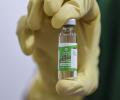
The Oxford/AstraZeneca vaccine is also being produced as part of a tie-up by the Serum Institute of India.
The phase 3 trial is being implemented as part of Operation Warp Speed, a multi-agency collaboration led by the US Health and Human Services, which aims at accelerating the development and manufacturing of medical countermeasures for COVID-19 and delivering 300 million doses of an effective vaccine by January 2021.
